
This study investigates the complex mechanisms of coupled heat and mass transfer within a fired porous clay plate optimized for evaporative cooling in hot and dry climates. The primary objective was to model and experimentally validate the material's ability to lower air temperature through capillary evaporation. Local results highlight a pronounced leading-edge effect, where a maximum evaporation flux of 0.78 g/m² induces rapid cooling within the first few centimeters of the plate. Under nominal conditions of 40°C and 20% relative humidity (RH), the outlet air temperature drops significantly to 25.38°C, corresponding to a thermal gain of nearly 15°C. The theoretical validity of the model is confirmed by the perfect superposition of local Nusselt (Nux) and Sherwood (Shx) numbers, demonstrating the consistency of the Chilton-Colburn analogy. Parametric analysis reveals that system efficiency is highly dependent on residence time and hygrometric potential: a moderate air velocity of 1.5 m/s combined with low initial humidity (10%) optimizes the process, achieving a record cooling of 17.4°C. Despite some simplifying assumptions (adiabatic walls, uniform saturation), comparison with experimental data shows excellent agreement, with an average relative error of 6% to 7% and a root mean square error (RMSE) of approximately 2°C. The research demonstrates that fired clay, owing to its porous structure that promotes capillary transport, constitutes an efficient passive heat exchanger and a sustainable alternative to energy-intensive air conditioning systems.
| Published in | American Journal of Modern Physics (Volume 15, Issue 3) |
| DOI | 10.11648/j.ajmp.20261503.13 |
| Page(s) | 86-95 |
| Creative Commons |
This is an Open Access article, distributed under the terms of the Creative Commons Attribution 4.0 International License (http://creativecommons.org/licenses/by/4.0/), which permits unrestricted use, distribution and reproduction in any medium or format, provided the original work is properly cited. |
| Copyright |
Copyright © The Author(s), 2026. Published by Science Publishing Group |
Fired Clay, Porous Media, Water, Coupled Transfers (Heat and Mass), Saturation, Evaporation
Properties | Cooked clay | Air |
|---|---|---|
Thermal conductivity (W.K-1.m-1) | 0.6 | 0.0275 |
Specific heat (J.kg-1.K-1) | 850 | 1007 |
Volumic mass (kg.m-3) | 1380 | 1.15 |
Dynamic viscosity (Pa.s) | -- | 1.810-5 |
Porosity (%) | 0.45 | -- |
RH | Relative Humidity |
RMSE | Root Mean Square Error |
MRE | Mean Relative Error |
| [1] | Philip, J. R. and De Vries, D. A. Moister Movement in Porous Materials under Temperature Gradients. Transactions, American Geophysical Union, 38, 222-232, 1957. |
| [2] | Luikov, A. V. Heat and mass transfer in capillary-porous bodies. Pergamon Press, Oxford, 1966. |
| [3] | R. Boukhanouf, A. Alharbi, O. Amer, and H. G. Ibrahim, "Experimental and Numerical Study of a Heat Pipe Based Indirect Porous Ceramic Evaporative Cooler," International Journal of Environmental Science and Development vol. 6, no. 2, pp. 104-110, 2015. |
| [4] | Cuce, P. M.; Riffat, S. A state of the art review of evaporative cooling systems for building applications. Renew. Sustain. Energy Rev. 2016, 54, 1240–1249. |
| [5] | Haile, M. G.; Garay-Martinez, R.; Macarulla, A. M. Review of Evaporative Cooling Systems for Buildings in Hot and Dry Climates. Buildings 2024, 14(11), 3504. |
| [6] | Misrak Girma Haile, Roberto Garay-Martinez, Ana M. Macarulla Review of Evaporative Cooling Systems for Buildings in Hot and Dry Climates, Buildings 2024, 14(11), 3504. |
| [7] | J. M. P. Q. Delgado (ed.), Heat and Mass Transfer in Porous Media, Advanced Structured Materials 13, Springer-Verlag Berlin Heidelberg 2012. |
| [8] | Yecong He, Tengjin Huang, Min Tan, Coupled calculation of heat and mass transfer of porous media under the effects of external energy sources, Chemical Engineering Transactions, 62, 337-342, 2017. |
| [9] | Patrick Perre. Coupled heat and mass transfer in porous media: insight and perspective of multiscale modelling. 18èmes Journées Internationales de Thermique (JITH 2017), Oct 2017, Monastir, Tunisia. ⟨hal-01816588⟩. |
| [10] | Energy Design Resources. Evaporative Cooling: Saving Energy in More Ways Than Ever—Innovations in Evaporative Cooling and Water Treatment. e-News 2010, 1–4. |
| [11] | Duan, Z.; Zhan, C.; Zhang, X.; Mustafa, M.; Zhao, X.; Alimohammadisagvand, B.; Hasan, A. Indirect evaporative cooling: Past, present and future potentials. Renew. Sustain. Energy Rev. 2012, 16, 6823–6850. |
| [12] | Cisse, S., Kabore, B., Ouedraogo, G. W. P., Kam, S., & Bathiebo, D. J. (2024). Numerical study of an evaporative exchanger based on fired clay. Science Research, 12(2), 20–27. |
| [13] | Zhou, Y., Zhang, T., Wang, F. et al. Numerical Study and Optimization of a Combined Thermoelectric Assisted Indirect Evaporative Cooling System. J. Therm. Sci. 29, 1345–1354 (2020). |
| [14] | Cisse, Salifou, Abdoul Aziz Ouiminga, Arnaud Ouermi, Boureima Kabore, Sié Kam, and Dieudonné Joseph Bathiebo. “Experimental Study of Hygrothermal Exchanges in an Evaporative Heat Exchanger Based on Fired Clay Plates for Air Cooling in Hot and Dry Climates”. Physical Science International Journal 29(4): 123-32, 2025. |
| [15] | Luikov, A. V. Systems of differential equations of heat and mass transfer in capillary-porous bodies (Review) International Journal of Heat and Mass Transfer, 18(1), pp. 1-14, 1975. |
| [16] | Zhou, Y.; Yan, Z.; Gao, M.; Dai, Q.; Yu, Y. Numerical Investigation of a Novel Plate-Fin Indirect Evaporative Cooling System Considering Condensation. Processes 2021, 9, 332. |
| [17] | Theodore L. Bergman, Adrienne S. Lavine. Fundamentals of heat and mass transfer. 8th edition, John Wiley & Sons, Inc, United States of America, 2017. |
| [18] | T. H. Chilton, and A. P. Colburn. Mass Transfer (Absorption) Coefficients: Prediction from Data on Heat Transfer and Fluid Friction. Industrial & Engineering Chemistry, 26, 1183-1187, 1934 |
| [19] | Bird, R., Stewart, W. and Lightfoot, E. Transport Phenomena. 2nd Edition, John Wiley and Sons, New York, 2002. |
| [20] | Ramin Ranjbarzadeh And Giuseppe Sappa. Numerical and Experimental Study of Fluid Flow and Heat Transfer in Porous Media: A Review Article. Energies 2025, 18(4), 976. |
| [21] | Neale, A., Derome, D., Carmeliet, J., & Blocken, B. J. E. (2007). Coupled simulation of vapor flow between air and a porous material. In X. Departement of Energy, & X. Oak Ridge National Laboratory (Eds.), Proceedings of the 10th Conference on the Thermal Performance of the Exterior Envelopes of Whole Buildings, 2-7 December 2007, Clearwater Beach, Florida (pp. 1-11). American Society of Heating, Refrigerating and Air-Conditioning Engineers, 2007. |
| [22] | Ahmed, N. and Kumar Das, K. (2013) MHD Mass Transfer Flow past a Vertical Porous Plate Embedded in a Porous Medium in a Slip Flow Regime with Thermal Radiation and Chemical Reaction. Open Journal of Fluid Dynamics, 3, 230-239, 2013. |
| [23] | L. D. Gu, J. C. Min, Y. C. Tang. Effects of mass transfer on heat and mass transfer characteristics between water surface and airstream International Journal of Heat and Mass Transfer. volume 122, Pages 1093-1102, 2018. |
| [24] | Alshenaifi, M. A.; Mesloub, A.; Hassen, W.; Abuhussain, M. A.; Kolsi, L. Numerical Analysis of Building Cooling Using New Passive Downdraught Evaporative Tower Configuration in an Arid Climate. Mathematics 2022, 10, 3616. |
| [25] | Meyer, J. A.; Perera, A. Modeling the performance of direct evaporative coolers in different climates. Energy 2021, 221, 119807. |
APA Style
Cisse, S., Zoungrana, W., Nébié, J., Kaboré, B., Komi, N. B., et al. (2026). Modeling of Coupled Heat and Mass Transfer for the Optimization of Evaporative Cooling Using a Porous Clay Plate. American Journal of Modern Physics, 15(3), 86-95. https://doi.org/10.11648/j.ajmp.20261503.13
ACS Style
Cisse, S.; Zoungrana, W.; Nébié, J.; Kaboré, B.; Komi, N. B., et al. Modeling of Coupled Heat and Mass Transfer for the Optimization of Evaporative Cooling Using a Porous Clay Plate. Am. J. Mod. Phys. 2026, 15(3), 86-95. doi: 10.11648/j.ajmp.20261503.13
@article{10.11648/j.ajmp.20261503.13,
  author = {Salifou Cisse and Windnigda Zoungrana and Jacques Nébié and Boureima Kaboré and Nebyinga Béatrice Komi and Abdoul Aziz Ouiminga and Sié Kam},
  title = {Modeling of Coupled Heat and Mass Transfer for the Optimization of Evaporative Cooling Using a Porous Clay Plate},
  journal = {American Journal of Modern Physics},
  volume = {15},
  number = {3},
  pages = {86-95},
  doi = {10.11648/j.ajmp.20261503.13},
  url = {https://doi.org/10.11648/j.ajmp.20261503.13},
  eprint = {https://article.sciencepublishinggroup.com/pdf/10.11648.j.ajmp.20261503.13},
  abstract = {This study investigates the complex mechanisms of coupled heat and mass transfer within a fired porous clay plate optimized for evaporative cooling in hot and dry climates. The primary objective was to model and experimentally validate the material's ability to lower air temperature through capillary evaporation. Local results highlight a pronounced leading-edge effect, where a maximum evaporation flux of 0.78 g/m² induces rapid cooling within the first few centimeters of the plate. Under nominal conditions of 40°C and 20% relative humidity (RH), the outlet air temperature drops significantly to 25.38°C, corresponding to a thermal gain of nearly 15°C. The theoretical validity of the model is confirmed by the perfect superposition of local Nusselt (Nux) and Sherwood (Shx) numbers, demonstrating the consistency of the Chilton-Colburn analogy. Parametric analysis reveals that system efficiency is highly dependent on residence time and hygrometric potential: a moderate air velocity of 1.5 m/s combined with low initial humidity (10%) optimizes the process, achieving a record cooling of 17.4°C. Despite some simplifying assumptions (adiabatic walls, uniform saturation), comparison with experimental data shows excellent agreement, with an average relative error of 6% to 7% and a root mean square error (RMSE) of approximately 2°C. The research demonstrates that fired clay, owing to its porous structure that promotes capillary transport, constitutes an efficient passive heat exchanger and a sustainable alternative to energy-intensive air conditioning systems.},
 year = {2026}
}
TY  - JOUR
T1  - Modeling of Coupled Heat and Mass Transfer for the Optimization of Evaporative Cooling Using a Porous Clay Plate
AU  - Salifou Cisse
AU  - Windnigda Zoungrana
AU  - Jacques Nébié
AU  - Boureima Kaboré
AU  - Nebyinga Béatrice Komi
AU  - Abdoul Aziz Ouiminga
AU  - Sié Kam
Y1  - 2026/05/12
PY  - 2026
N1  - https://doi.org/10.11648/j.ajmp.20261503.13
DO  - 10.11648/j.ajmp.20261503.13
T2  - American Journal of Modern Physics
JF  - American Journal of Modern Physics
JO  - American Journal of Modern Physics
SP  - 86
EP  - 95
PB  - Science Publishing Group
SN  - 2326-8891
UR  - https://doi.org/10.11648/j.ajmp.20261503.13
AB  - This study investigates the complex mechanisms of coupled heat and mass transfer within a fired porous clay plate optimized for evaporative cooling in hot and dry climates. The primary objective was to model and experimentally validate the material's ability to lower air temperature through capillary evaporation. Local results highlight a pronounced leading-edge effect, where a maximum evaporation flux of 0.78 g/m² induces rapid cooling within the first few centimeters of the plate. Under nominal conditions of 40°C and 20% relative humidity (RH), the outlet air temperature drops significantly to 25.38°C, corresponding to a thermal gain of nearly 15°C. The theoretical validity of the model is confirmed by the perfect superposition of local Nusselt (Nux) and Sherwood (Shx) numbers, demonstrating the consistency of the Chilton-Colburn analogy. Parametric analysis reveals that system efficiency is highly dependent on residence time and hygrometric potential: a moderate air velocity of 1.5 m/s combined with low initial humidity (10%) optimizes the process, achieving a record cooling of 17.4°C. Despite some simplifying assumptions (adiabatic walls, uniform saturation), comparison with experimental data shows excellent agreement, with an average relative error of 6% to 7% and a root mean square error (RMSE) of approximately 2°C. The research demonstrates that fired clay, owing to its porous structure that promotes capillary transport, constitutes an efficient passive heat exchanger and a sustainable alternative to energy-intensive air conditioning systems.
VL  - 15
IS  - 3
ER  -
Department of Physics, Joseph Ki-Zerbo University, Ouagadougou, Burkina Faso
Department of Physics, Joseph Ki-Zerbo University, Ouagadougou, Burkina Faso
Department of Physics, Joseph Ki-Zerbo University, Ouagadougou, Burkina Faso; Department of Physics, Thomas Sankara University, Saaba, Burkina Faso
Department of Physics, Joseph Ki-Zerbo University, Ouagadougou, Burkina Faso; Department of Physics, Norbert Zongo University, Koudougou, Burkina Faso
Department of Physics, Joseph Ki-Zerbo University, Ouagadougou, Burkina Faso; Department of Physics, Ecole Normale Supérieure (ENS), Koudougou, Burkina Faso
Department of Physics, Joseph Ki-Zerbo University, Ouagadougou, Burkina Faso
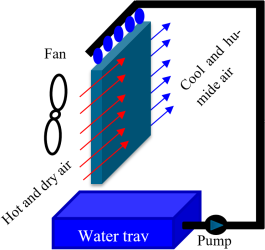
Figure 1. Schematic diagram of the system.
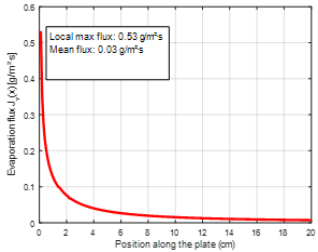
Figure 2. Evolution of the evaporation rate along the plate.
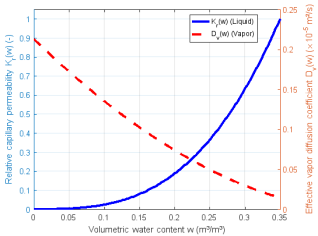
Figure 3. Local evolution of the Nusselt and Sherwood numbers.
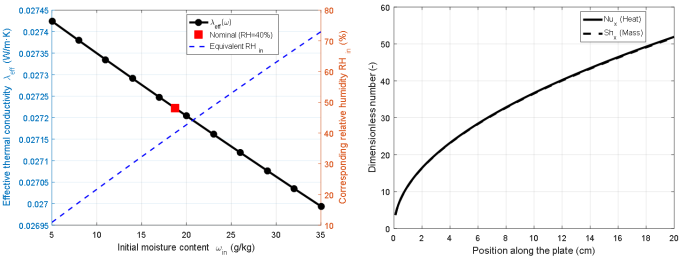
Figure 4. Thermal conductivity of the air-vapor mixture as a function of moisture content.
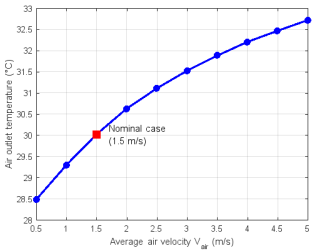
Figure 5. Evolution of relative capillary permeability Kr and effective vapor diffusion coefficient Dv as a function of moisture content.
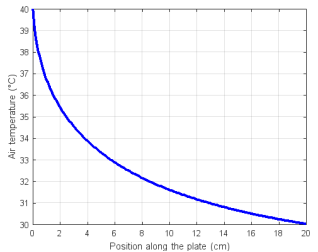
Figure 6. Evolution of air temperature along the porous plate.
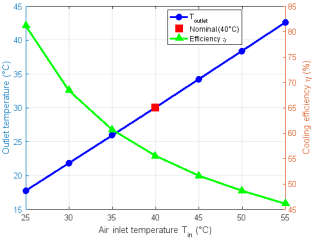
Figure 7. Influence of air velocity on evaporative cooling.
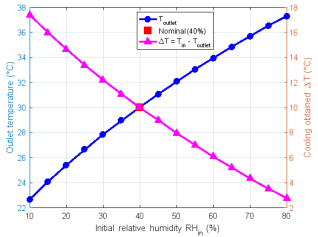
Figure 8. Influence of inlet air temperature on cooling and efficiency.
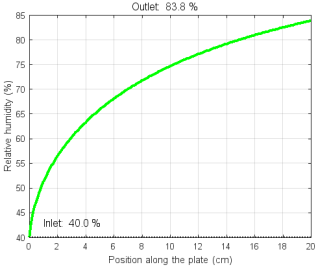
Figure 9. Evolution of relative humidity along the fired clay plate.
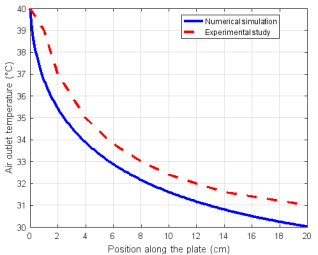
Figure 10. Influence of initial relative humidity on evaporative cooling.
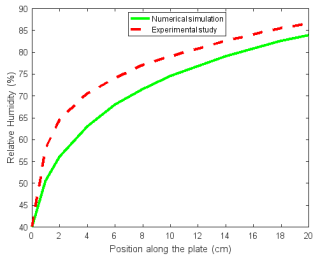
Figure 11. Comparison of experimental and theoretical results for temperature and relative humidity evolution [14].

Information



 Share This Article
 Twitter
 Linked In
 Facebook
 Copy
Copy Download